 JAFO Live Greater Austin / Travis
About JAFO Live
JAFO turns the public-safety radio traffic of Greater Austin / Travis into plain-English stories, live, so neighbours, reporters and the curious can see what's going on without learning scanner code.
What it is
JAFO (short for "Just Another F***ing Observer") is an independent listening station. A small computer with radio receivers sits in the Valley and listens to the same public-safety channels anyone with a scanner can hear: police, fire, EMS, public works and other agencies on the regional radio system.
Instead of a wall of crackly audio and codes, you get stories: "Large warehouse fire on South Weaver in McAllen, twelve units, crews on scene." Each one shows where it is (to the block), which units are working it, how it has progressed, and the radio calls behind it.
JAFO is not affiliated with any police department, fire department, EMS service, city, county or government agency. Nothing on this site is an official record.
How a radio call becomes a story
- Listen. JAFO's receivers follow the trunked digital (P25) radio system and record each transmission as it happens. Channels that are encrypted can't be heard and are skipped.
- Clean up. Silence and static are trimmed, and calls with no speech are dropped.
- Write it down. Speech recognition (Whisper) turns the audio into text.
- Make sense of it. An AI model (Anthropic's Claude) reads each call along with recent ones on the channel. It writes one plain-English line and works out who is speaking. It explains radio codes, picks out the units and their status, and pins the location to the block. It also decides whether the call is a new incident or an update to one already open, and lists anything private that must be hidden (see below).
- Publish. The story appears on the briefing, map, console and wall screens, usually within about a minute of the radio call. Stories go quiet and then wrap up when the radio does.
The same receivers also pick up aircraft position broadcasts (ADS-B) and airline text messages (ACARS). Weather comes from the National Weather Service, and traffic camera stills from TxDOT's public cameras.
Is this legal?
Yes. Listening to unencrypted public-safety radio has been lawful in the United States for decades. It's what millions of scanner owners, scanner apps and newsrooms do every day.
- Federal law says so directly. The Electronic Communications Privacy Act makes it lawful for anyone to intercept a radio communication sent by a government, law-enforcement, civil-defense, private land-mobile or public-safety radio system that is readily accessible to the general public (18 U.S.C. § 2511(2)(g)).
- "Readily accessible" means not encrypted. Under the same law, a scrambled or encrypted transmission isn't readily accessible (18 U.S.C. § 2510(16)). That's why JAFO skips encrypted channels instead of trying to decode them.
- Texas follows the same rule. Texas wiretap law (Penal Code § 16.02(c)) protects interception of unencrypted government, law-enforcement, civil-defense and public-safety radio. It treats police mobile data terminals (the text screens in patrol cars) differently, and JAFO doesn't receive those. It listens to voice radio only.
- Aircraft broadcasts are meant to be heard. ADS-B position reports are broadcast in the open so anyone can track aircraft, and community networks share them worldwide. ACARS airline messages are sent unencrypted over the air.
- Misusing what you hear is a different matter. Using radio information to commit a crime, to avoid arrest or to interfere with police, fire or EMS is illegal, and it's not what this site is for.
This is a plain-language summary, not legal advice.
How accurate is it?
JAFO is automated, and no one checks each story before it appears. Expect mistakes.
- Speech recognition mishears. Radio audio is clipped, noisy and full of jargon. Street names and unit numbers are the most common errors.
- The AI can misread a call. It can group two incidents into one, or split one into two, or get a status wrong. Locations can be off, especially when a call only names a road or a business.
- A call is not a finding. What's said on the radio is what was reported at that moment: an allegation or a first impression, not a conclusion. A "shots fired" call can turn out to be fireworks. Nothing here means anyone did anything wrong.
- We don't hear everything. Encrypted channels, other radio systems, phone calls and in-person reports never reach JAFO. A quiet map doesn't mean a quiet city.
- Updates can lag. Stories usually appear within about a minute, but busy periods or a receiver problem can delay them.
For official information, contact the agency involved. For news, check local reporting.
Aircraft and airline messages
The "In the air" views show aircraft from JAFO's own ADS-B receiver, plus community networks (adsb.lol, adsb.fi and airplanes.live) where JAFO's antenna can't reach. We highlight helicopters, Border Patrol, police, medical and military flights, emergency codes, and aircraft circling near an incident.
- We show only what the aircraft broadcasts, plus the public FAA registry for the owner of private and government aircraft. Some owners ask the FAA to limit how their aircraft is displayed, and community networks may still show those aircraft.
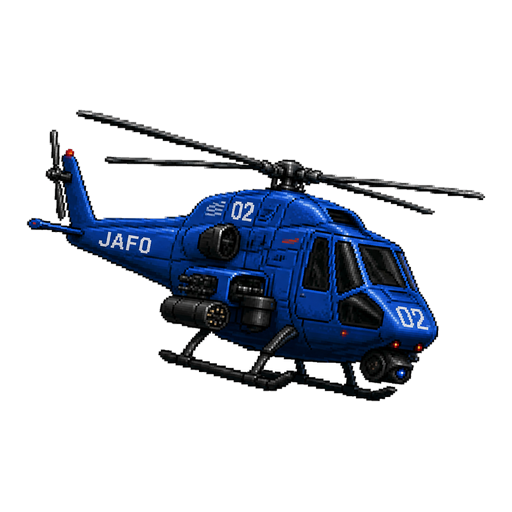
- Aircraft pictures are illustrations drawn from the reported type and airline. Colours are approximate, and they are not photos of that aircraft.
- Airline ACARS messages are translated into plain English, such as "Took off from McAllen at 11:24 am, bound for Dallas–Fort Worth". Routine machine data is hidden, and the original text is one tap away.
What we keep, and for how long
| Recordings | Kept for 14 days on JAFO's server, then deleted. The listening station itself keeps only the last few hours. |
|---|---|
| Stories and transcripts | Kept as an archive of what was said on the air, with private details removed as described above. |
| Aircraft tracks | Kept for 48 hours. |
| You | No account is needed. Saved places, filters and your theme stay in your browser. Alert sign-ups store only your browser's push address, the region and the alert level you picked. Place searches are looked up on JAFO's server, using its own records and OpenStreetMap. |
| Who's watching | The "watching now" counter and its map show roughly where viewers are, by city. The city is estimated from your internet address on JAFO's own server, using the free IP to City Lite database by DB-IP.com (CC BY 4.0). Your address is never stored or shown, and nothing finer than a city appears. Viewers drop off the map a minute or two after they leave. |
Corrections and removal requests
If something is wrong, or something private is showing that shouldn't be, use Report a problem. It's in the menu and on every story and radio call. Reports go straight to the people who run JAFO, who can correct a story, soften it or take it down.
Build your own
JAFO runs on a small, inexpensive listening station. The same hardware that runs this site can put your town on the map. The parts:
- Raspberry Pi 5The computer. It runs the radio decoding and sends calls to JAFO's server. Use the official 27 W power supply and an active cooler, because it runs hot.Buy →
- Airspy R2The main radio. It's wide enough to follow a whole trunked public-safety system at once.Buy →
- RTL-SDRThe second radio. It listens to aircraft (ADS-B) and airline messages (ACARS).Buy →
- AntennaUse whatever you already have, since any decent scanner antenna will get you started. A discone mounted high and outdoors is best. A simple starter antenna works fine on a windowsill.Best: discone →
Starter → - Cables & adaptersBoth radios have SMA jacks. If your antenna's plug doesn't match (discones often use N-type or SO-239), get an adapter or a short coax jumper with SMA male on the radio end. Keep coax runs short, or use low-loss cable such as LMR-400 for long runs, because cable loss is worst at 800 MHz and above.
- Splitter (one antenna)To run both radios from one antenna, put a wideband splitter rated for at least 100 to 1100 MHz in front of them. That range covers ACARS at 131 MHz, public safety at 800 MHz and aircraft at 1090 MHz. A passive splitter costs each radio about 3.5 dB, so use a powered splitter or put a low-noise amplifier at the antenna if signals are weak.
Height matters more than price: an antenna up high and outside beats an expensive one indoors. A single install command sets up the software, finds the nearest radio sites and joins your station to the JAFO Live network.